🌐 Este artigo também está disponível em português 🇧🇷 Leia aqui
🌐 Este artículo también está disponible en español 🇪🇸 Lee aquí
How long does a journey take? This immigrant writer would answer that question with a single word, one that unfolds into hundreds of others: It depends!

For Ousman Umar, a young Ghanaian man, it took five long years to reach Barcelona after leaving his country. A journey that crossed Niger, Algeria (the Sahara), Libya and the Mediterranean Sea before finally arriving in Fuerteventura (Canary Islands), and which, unfortunately, left him with memories that no human being should ever have to endure. Because, in this case, we are talking, as Ousman himself denounces, about human trafficking.

The reader who believes that a migration process begins the moment someone leaves their country, and that the journey ends upon reaching the destination, is mistaken. The truth is that a migration process begins when the very reason that caused it starts driving you away from the place that, for you, was once called home. Along with it comes migratory grief, as you are forced to fit an entire lifetime into a suitcase, or into whatever little space you have available to carry your belongings, in Ousman's case, a small backpack. And although that grief may not be felt at first, sooner or later it comes knocking at the door. Some psychologists once argued that a person could experience its effects for up to two years after emigrating, but nowadays there is increasing recognition that this is a form of grief that never truly comes to an end.

Along this journey, a person may go through experiences that leave permanent marks on their life, such as having to drink their own urine while crossing the desert or falling into the hands of human traffickers. But there are other situations that can also leave deep marks on many people's lives. What happens when, at last, you reach the place you have longed for, only to discover that some problems have been left behind, while many new ones begin to emerge? And there are plenty of them. Cultural shock. The language. The stares. The number of "no's" you receive in a foreign language. The way you begin to perceive your own body...

When people make condemnatory remarks such as, "They live off benefits...", the truth is quite the opposite. It is precisely those who receive no financial support and live in precarious conditions who also contribute to sustaining the system, paying VAT every time they buy a packet of rice or pasta. Because, in general, all they seek is the opportunity to work, to study and to build a life with dignity. That is the dream. Not to be handed anything. Simply the opportunity to fight for a better life.

Yet, many people, while trying to defend immigrants, often make another mistake by saying:

"But what's wrong with that? The truth is, they're not taking anyone's jobs. They're here picking crops or cleaning..., doing the jobs that many nationals don't want to do."

But is there any crime in wanting to become something more?

Is there any crime in not wanting to spend the rest of your life under a 40-degree sun harvesting melons? Is it not possible to dream of getting a university degree, helping to build a country and serving people, all of them, as a lawyer or a teacher? Is it not also permissible to dream, just as Ousman did when he first saw that aeroplane?

On the other hand, there is the issue of irregular immigration, a subject that has been familiar, at least to us Latin Americans, since the end of the fifteenth century, when a number of ships arrived on our shores, although with a historical outcome very different from the one we witness today. Yet there is one question that has accompanied me for a long time: What does it mean to be an immigrant? The answer, this immigrant writer dares to suggest, depends on the position from which each human being observes reality and experiences the world. It is important to point out that, for integration to exist, there must first be openness, in other words, open doors through which people can enter and adapt.

That is why I believe that, whenever immigrants are discussed today, whether in public policy, in the press or in conversations on café terraces, what is really being referred to is a particular migratory condition, associated with certain places of origin and with particular racial characteristics. It is interesting to observe that people such as Jorge Drexler and Shakira, both undeniably talented musicians, seem to have ceased being primarily "read" as immigrants and have instead come to be recognised as singer-songwriters, a status reserved for only a few.

For the rest of the immigrants, perhaps for most of us, that remains our primary label. It would come as no surprise if the skin colour of this large group were further removed from the "whiteness" with which many natives tend to identify themselves (although there is, of course, great diversity among them as well). It is this majority of immigrants I am talking about, the one that remains under society's magnifying glass, reflected in the security staff of shopping centres and supermarkets, who do not allow us to pass unnoticed as ordinary working citizens who have simply come in to buy a packet of rice. Or even when someone has the opportunity to have the set lunch at a restaurant and, on the way to the toilet, a considerable number of customers from other tables stop you to ask whether their order will take much longer or whether you could, "please", bring them another glass of wine.

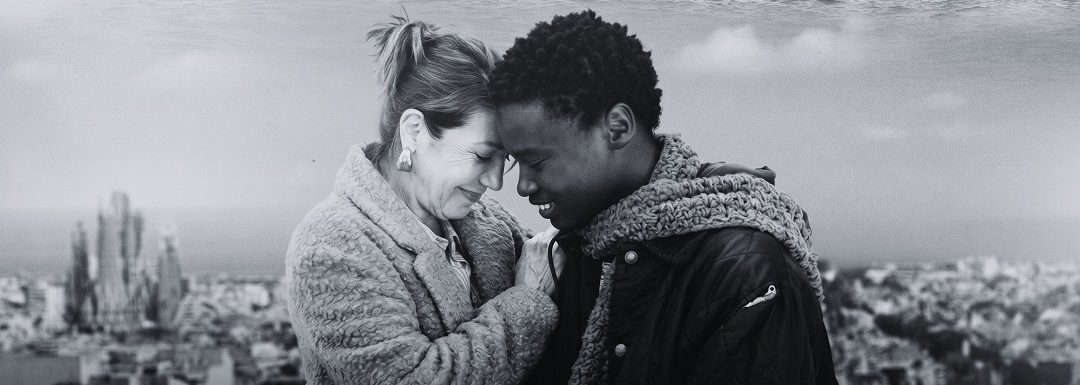
Returning to the film, it generously suggests that the greatest refuge against hostility lies in friendship, solidarity, love (Montse and Armando, remember those names) and, above all, education. In this way, when someone goes through the process of rebuilding their life (finding a new meaning after their migration journey) and commits themselves to ensuring that others do not have to walk the same path, they are, without doubt, helping to build a better world.

Nothing more.

Greetings from Middle-earth,

Alan Leites 🌻
More about my literary work at alanleites.com
Image: internet
🌐 Portuguese version 🇧🇷 Read here
🌐 Spanish version 🇪🇸 Read here